Kanal
Kanał, Poland, 1957, 91 mins, black and white

Director: Andrzej Wajda • Head of Production: Stanisław Adler, for Zespół Filmowy Kadr • Screenplay: Jerzy Stefan Stawiński, based on his short story • Cinematography: Jerzy Lipman • Editing: Halina Nawrocka • Production Designer:Roman Mann • Costumes: Jerzy Szeski • Music: Jan Krenz • Sound: Józef Bartczak
Cast: Teresa Iżewska (messenger, codename “Stokrotka”), Tadeusz Janczar (Jacek, “Korab”, platoon commander), Wieńczysław Gliński (Lieutenant “Zadra”, company commander), Tadeusz Gwiazdowski (Sergeant “Kula”), Stanisław Mikulski (“Smukły”), Emil Karewicz (Lieutenant “Mądry”, Zadra’s deputy), Władysław Sheybal (Michał, composer), Teresa Berezowska (messenger Halinka), Zofia Lindorf (woman searching for her daughter), Janina Jabłonowska (woman cursing the insurgents), Maria Kretz (woman with a severed leg), Jan Englert (“Zefir”), Kazimierz Dejunowicz (Captain “Zabawa”), Zdzisław Leśniak (“Mały”), Maciej Maciejewski (Lieutenant “Gustaw”), Adam Pawlikowski (German at the sewer outlet)
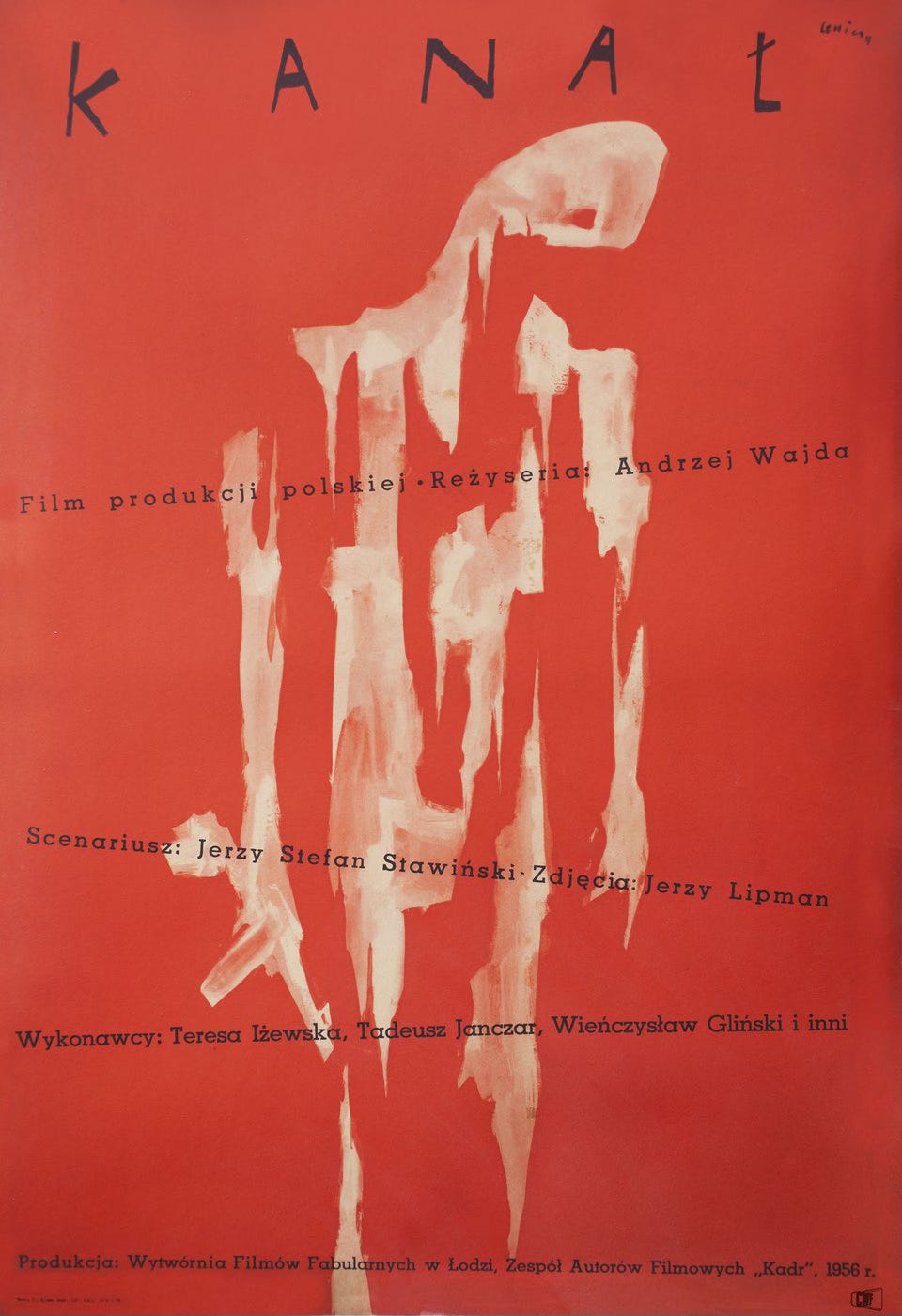
For Poles, the heroic but doomed Warsaw Uprising of the summer 1944 wasn’t just one of the pivotal events of WWII but one of the great events in their national history, and it was inevitable that someone would make a film about it at some point. But it was always going to be a controversial project in Communist Poland, not least because of who was primarily responsible: the Home Army, or Armia Krajowa, an organisation that had been comprehensively vilified ever since the end of the war thanks to the uncomfortable fact that it was originally formed to oppose the near-simultaneous Nazi and Soviet invasions of September 1939.
Accordingly, after the war ended, the Home Army’s reputation was dragged through the mud, its achievements comprehensively rewritten, many of its veterans arrested, imprisoned, and even executed. Wajda wasn’t even able to mention the Home Army by name in any of his first three features (the closest he got was in Kanal, where explicitly pro-Home Army graffiti can be briefly glimpsed in the background to one shot), despite their prominent role in all three narratives, particularly this one. Of course, pretty much everyone in Poland knew who was behind the Warsaw Uprising, so a ban on naming it on screen proved somewhat ineffectual once the decision to greenlight the film had been taken at a high government level.
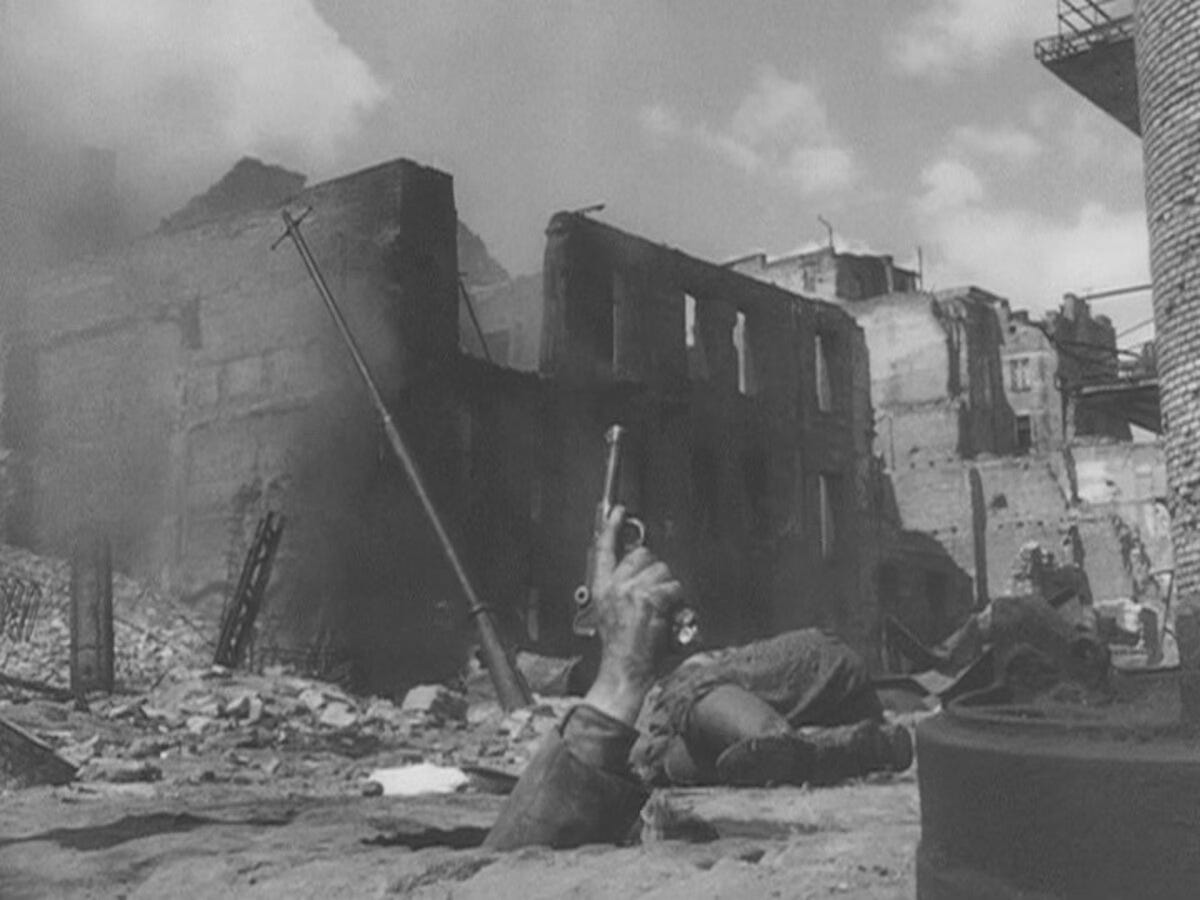
Jerzy Kawalerowicz and Tadeusz Konwicki of the Kadr Film Unit were the prime movers behind the Kanal project, hiring the writer Jerzy Stefan Stawiński to turn his eponymous short story, based on his first-hand participation in the Uprising, into a screenplay. The question of tone posed the first challenge: should it be propagandist and celebratory, or brutally honest about the Uprising’s ultimate failure. The fact that the screenplay was initially called For Homeland’s Glory before reverting to Stawiński’s original title is revealing enough in itself.
The English title Kanal sounds like “canal”, which is also a legitimate translation of the near-homonymous Polish Kanał (note the last letter)—except for the fact that in a 1944 Warsaw Uprising context it unambiguously means “sewer”, and pretty much every adult Pole in 1957 would have known what this referred to: the fact that the Home Army survivors took to the Warsaw sewers to evade being killed by the Germans, using them as a network of ready-made underground tunnels. And practically the film’s entire second half is set in the sewers, which posed several technical and conceptual challenges. Andrzej Munk seemed like the perfect director, with his extensive professional documentary experience (especially a notably exciting hour-long film from 1955 about a mountain rescue, Men of the Blue Cross/Błękitny krzyż), but he turned the project down after preliminary research established that it would be impossible to film down real sewers, and he felt that this was essential for the realism that he was after.
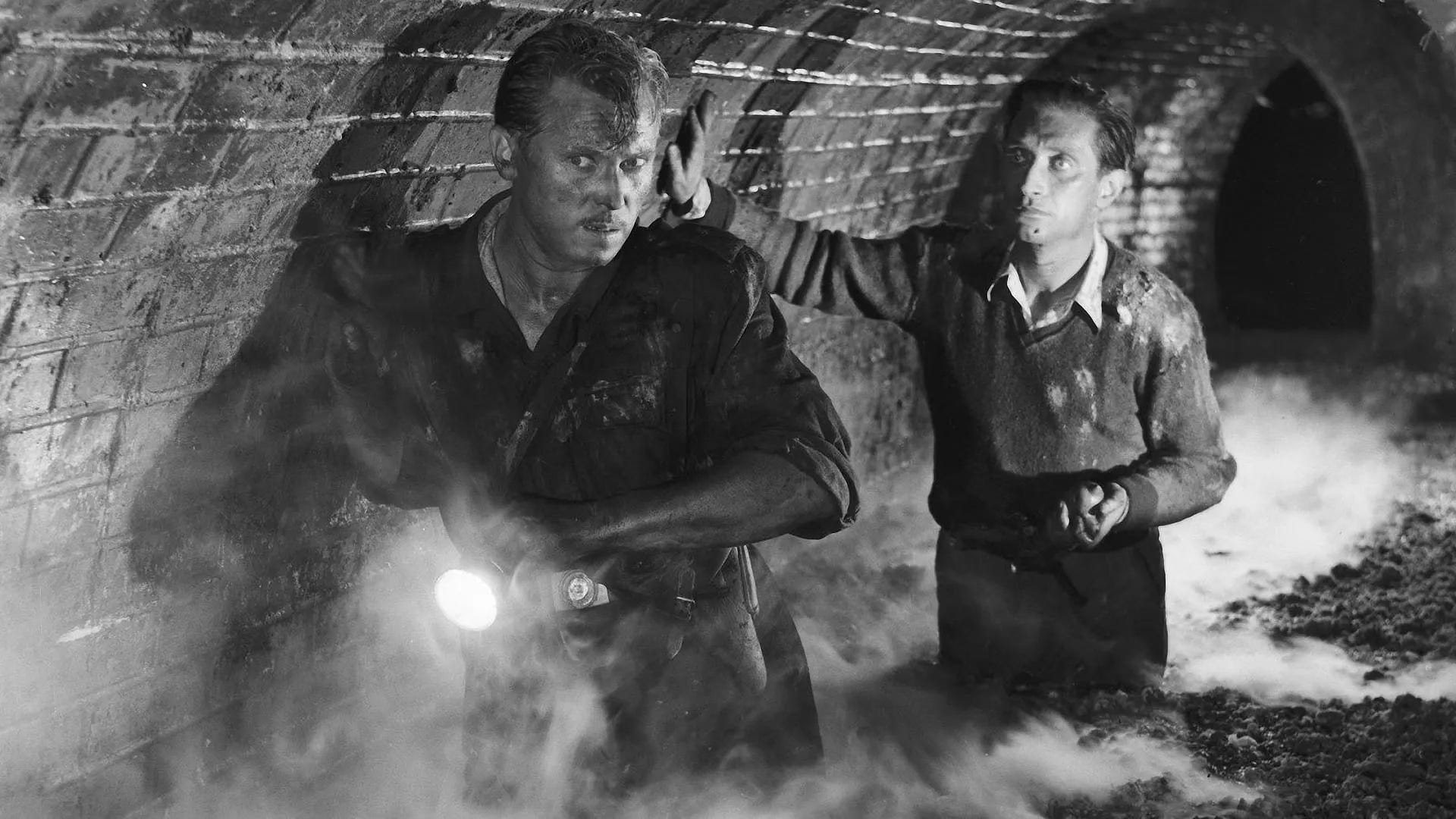
So the project was offered to Andrzej Wajda, who’d only made two professional films (his debut feature, A Generation/Pokolenie, and the short documentary Towards the Sun/Idę do słonca, both premiering in 1955), but Kawalerowicz and Konwicki were in no doubt of his talent. But it was a daunting project for Wajda to have taken on given that even at the pre-production stage it was one of the highest-profile Polish films ever made: if Kanal had failed artistically, there would be nowhere for him to hide.
While A Generation had been noticeably hampered by then-compulsory Socialist Realism, this was less of an issue with Kanal, even though the same strictures were still notionally in place. But between the formal approval of the script (January 1956) and the shooting over the summer, the Soviet leader Nikita Khrushchev had formally denounced Stalin, and Poland’s Stalinist President Bolesław Bierut had died, with his successor Edward Ochab instituting a very mild cultural and political thaw. Which meant that while the Kanal production still had to labour under some restrictions, such as not explicitly identifying the Home Army, in general Wajda felt emboldened enough not to bother with ticking the usual compulsory Socialist Realist boxes: there’s no lecture on the virtues of Marxism, for instance. And the usual Manichean struggle between good and evil was easy enough to facilitate by virtue of the core subject matter: Poles desperately attempting to stay alive in the face of massive German-perpetrated destruction.
Much more of an ensemble piece than A Generation, Kanal interweaves numerous characters and subplots as it depicts the final days of a Home Army platoon, seen trudging through the Warsaw ruins in the virtuoso four-minute opening shot as a voiceover informs us that their numbers have dwindled from 70 to 43 in just three days, and that we’re watching their final hours—a starkly pessimistic upfront admission that sets the fatalistic tone.
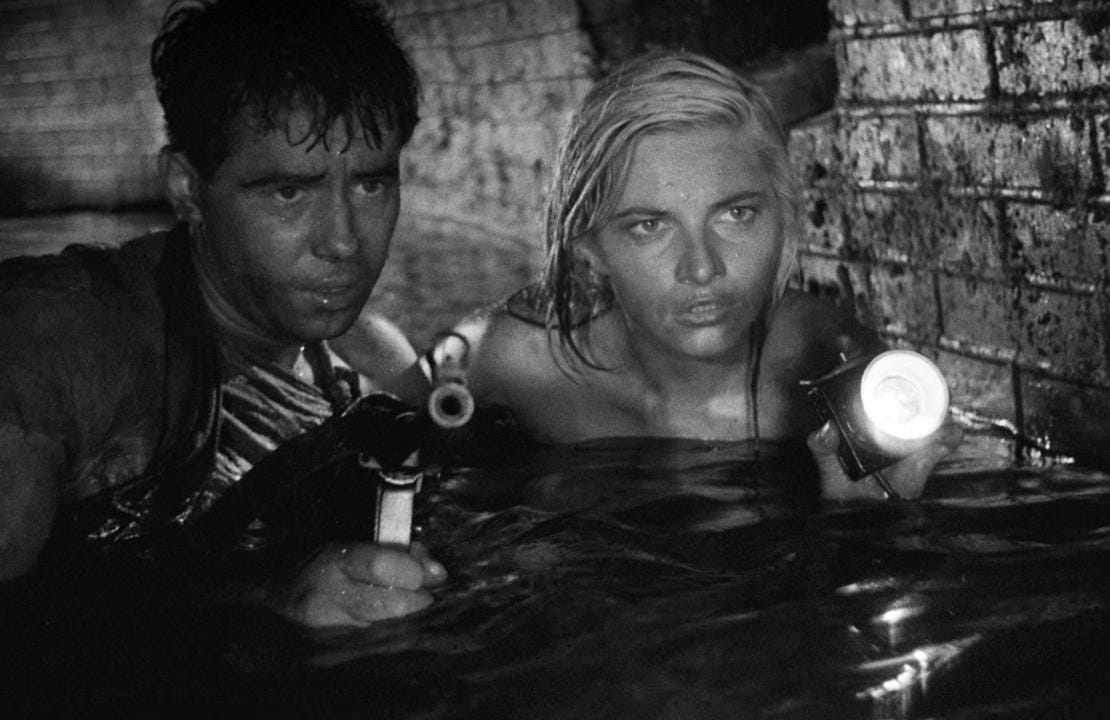
They’re mostly known by their codenames—the platoon commander is Lieutenant “Zadra” (“Splinter”), his second-in-command is “Mądry” (“Wise”), the sergeant is “Kula” (“Bullet”), and other comrades-in-arms include “Stokrotka” (“Daisy”), “Korab” (“Ark”), “Smukły” (“Slim”), “Mały” (“Little”), and “Zefir” (“Zephyr”)—this last a fleet-footed teenage messenger, the task that Wajda himself performed for the Home Army during the war. (Zefir is played by the young Jan Englert, who many decades later would command the platoon in Wajda’s last WWII film Katyń in 2007). Practically the only character who uses his birth name throughout is the musician Michał, a rare instance of the great Vladek Sheybal performing in his native country (under his own birth name Władysław; when he emigrated permanently to the UK shortly afterwards he switched to the diminutive as it was easier for Britons to pronounce).
The film’s first half sees the platoon trying to hold out above ground, with German bombs exploding around them, and an encounter with a remote-controlled mine (a German Goliath) seriously wounds Korab (Tadeusz Janczar, who played a similarly doomed character in A Generation). Facing otherwise near-certain extermination, Zadra reluctantly gives the order to descend into the sewers, which Wajda explicitly equates (courtesy of Michał quoting it) with one of Dante’s circles of hell. Although in reality, it would have been far worse, with near-total darkness and an overpowering stench, neither of which could be satisfactorily conveyed on film. (A line “It’s shit, not [poison] gas!” was cut from the script, presumably because the olfactory imagery was a bit too vivid.)
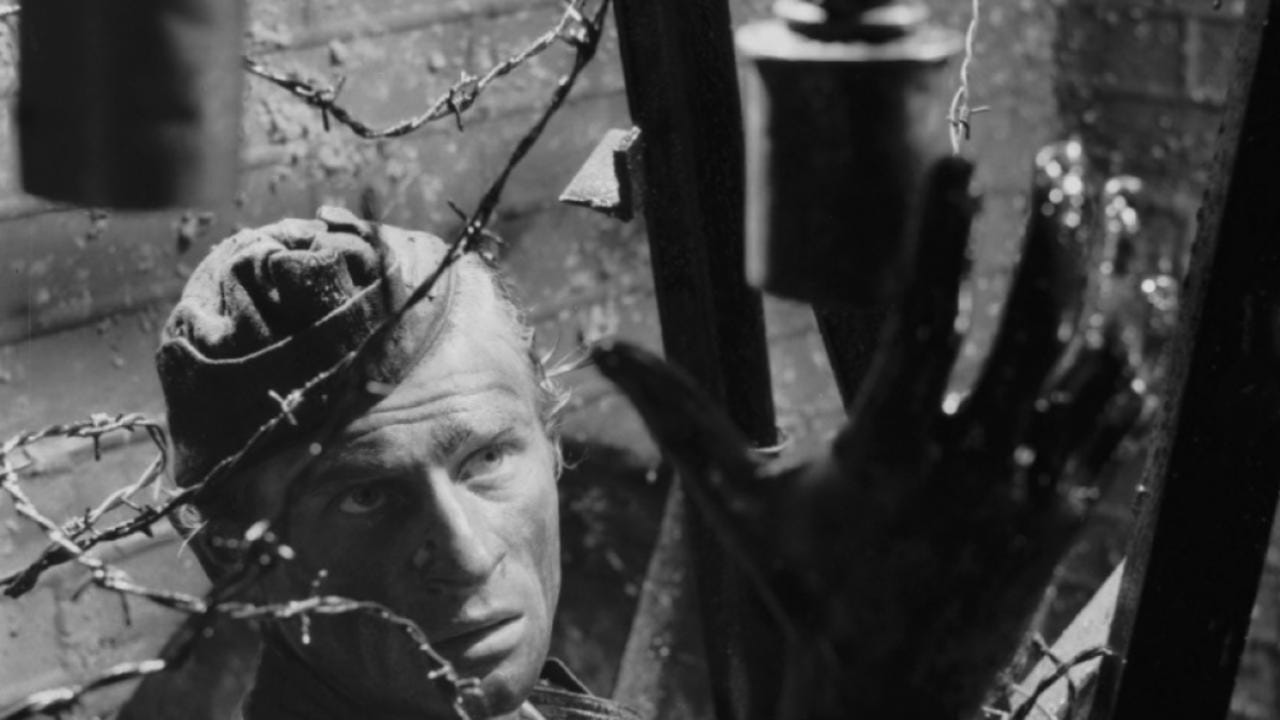
Instead, as convincing dramatic equivalents, Wajda adopts a combination of Expressionism and Surrealism in terms of both imagery and staging, as the platoon encounters increasingly hallucinatory horrors—at one point they hear howling, as if from a wild animal, but it turns out to be an army colonel dressed in a pre-war uniform dated from the 1920s, the most bizarre thing about the episode being that it was drawn directly from Jerzy Stefan Stawiński’s own experience down the sewers. As the characters variously die and/or go insane, the Dante citation becomes increasingly apt, because at its most powerful Kanal itself is one of the most powerful secular visions of hell ever conceived, right up there with Dante, Bosch and Goya.
Besides not being allowed to mention the Home Army, Wajda was also forbidden to mention that the Red Army was waiting on the other side of the Vistula River for the Germans to finish mopping up the surviving Poles, to allow the Soviets to pick off the hopefully weakened Germans. But few adult Poles in the film’s original audience would have failed to pick up on the meaning of the scene in which Korab and Stokrotka find their intended escape route blocked by iron bars and are forced to look desperately across the river; we can’t see what they see, but it’s not hard to imagine.
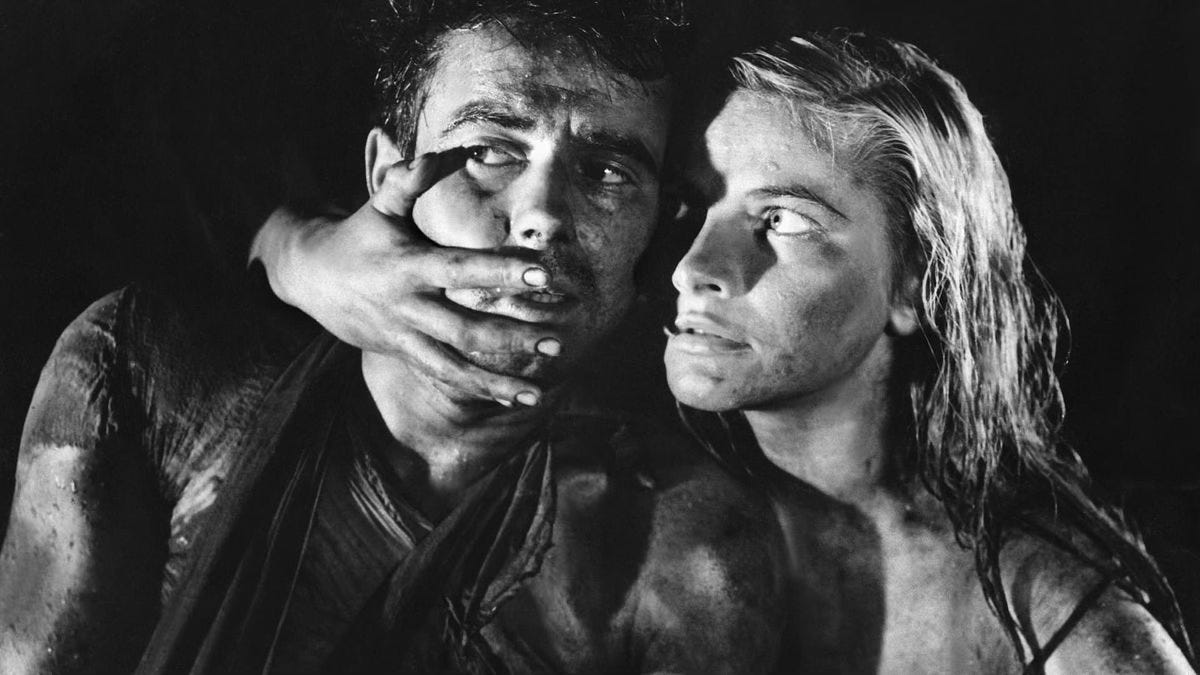
Perhaps inevitably, Kanal received a mixed critical reception at home—many were expecting something more overtly celebratory, or at least slightly upbeat, than Wajda’s grim masterpiece, however brilliantly it had been realised. But it was an enormous box-office hit that was then picked as Poland’s official submission to the Cannes Film Festival, where a jury chaired by Jean Cocteau and which included Michael Powell awarded it the Special Jury Prize, shared with Ingmar Bergman’s The Seventh Seal/Det sjunde inseglet. And it’s arguable that the film’s Cannes success did more to put postwar Polish cinema on the international map than any other single event—as well as raising awareness of the Uprising itself, which up to then had had little coverage outside Poland. Stawiński was even asked during the press conference how he had come up with such a brilliant idea, and had to explain to astonished journalists that he was merely dramatising his own real-life experience.