Intimate Lighting
Intimní osvětlení, Czechoslovakia, 1965, 74 mins, black and white

Director: Ivan Passer • Heads of Production: Vladimír Bor, Jiří Sebor, for Filmové Studio Barrandov • Screenplay: Jaroslav Papoušek, Ivan Passer, Václav Šašek • Cinematography: Miroslav Ondříček, Josef Střecha • Editing: Jiřina Lukešová • Production Designer: Karel Černý • Costumes: Zdena Kadrnožková, Dagmar Krausová • Sound: Adolf Böhm
Cast: Karel Blažek (music school director Karel, aka “Bambas”), Zdeněk Bezušek (Petr, Karel’s former classmate), Věra Křesadlová (Štěpa, Petr’s girlfriend), Jan Vostrčil (Grandpa Švehl, Karel’s father-in-law), Jaroslava Štědrá (Maruš, Karel’s wife), Vlastimila Vlková (Grandma Švehlová, Karel’s mother-in-law), Karel Uhlík (pharmacist), Dagmar Ředinová (little Maruš, Bambas’ daughter), Miroslav Cvrk (Kája, Bambas’ son), Jiří Růžička, Martin Štědrý, Josef Hart, Jarouš Chmelík
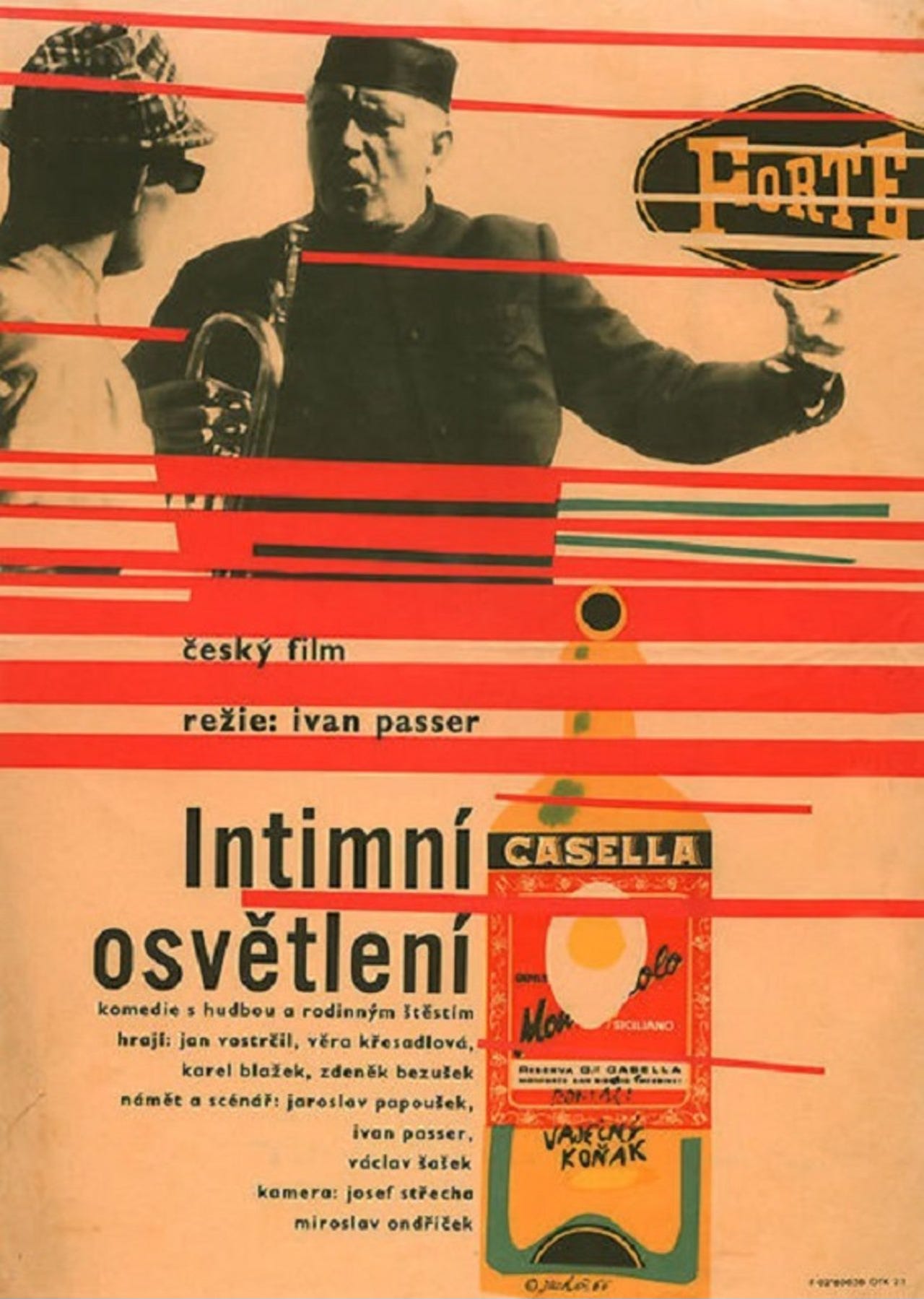
Although less famous than the Oscar-winning diptych of The Shop on the High Street (Obchod na korze, 1965) and Closely Observed Trains (Ostře sledované vlaky, 1966) or the early work of Miloš Forman (which Ivan Passer co-scripted and worked on as assistant director), Intimate Lighting may well be the quintessential Czechoslovak New Wave film. Lasting an admirably tight 74 minutes, it invites us to share a weekend in the countryside with six couples and two small children, and in the course of a series of outwardly unexceptional events and conversations it unveils a great many truths that are no less profound for being slipped past so subtly that they might well be missed on a first viewing.
The opening sequence initially feels like a re-run of Forman’s short If There Were No Music (Kdyby ty muziky nebyly, 1963), which Passer co-wrote. In it, a conductor attempts to wring a recognisable version of the Dvorak Cello Concerto out of a decidedly elderly provincial orchestra whose members prefer whispered asides and subversive muttering to musical concentration. Musical coaxing of various kinds will become one of the film’s recurring motifs, whether it’s a brief glimpse of a child’s violin lesson, an attempt to render the rhythm of the phrase “I love you” with a car horn or to make musical sense of Grandpa Švehl’s sonorous snoring, the mournful brass band accompanying the funeral procession, or the string quartet rehearsal that for the first time establishes common ground between the three leading men.
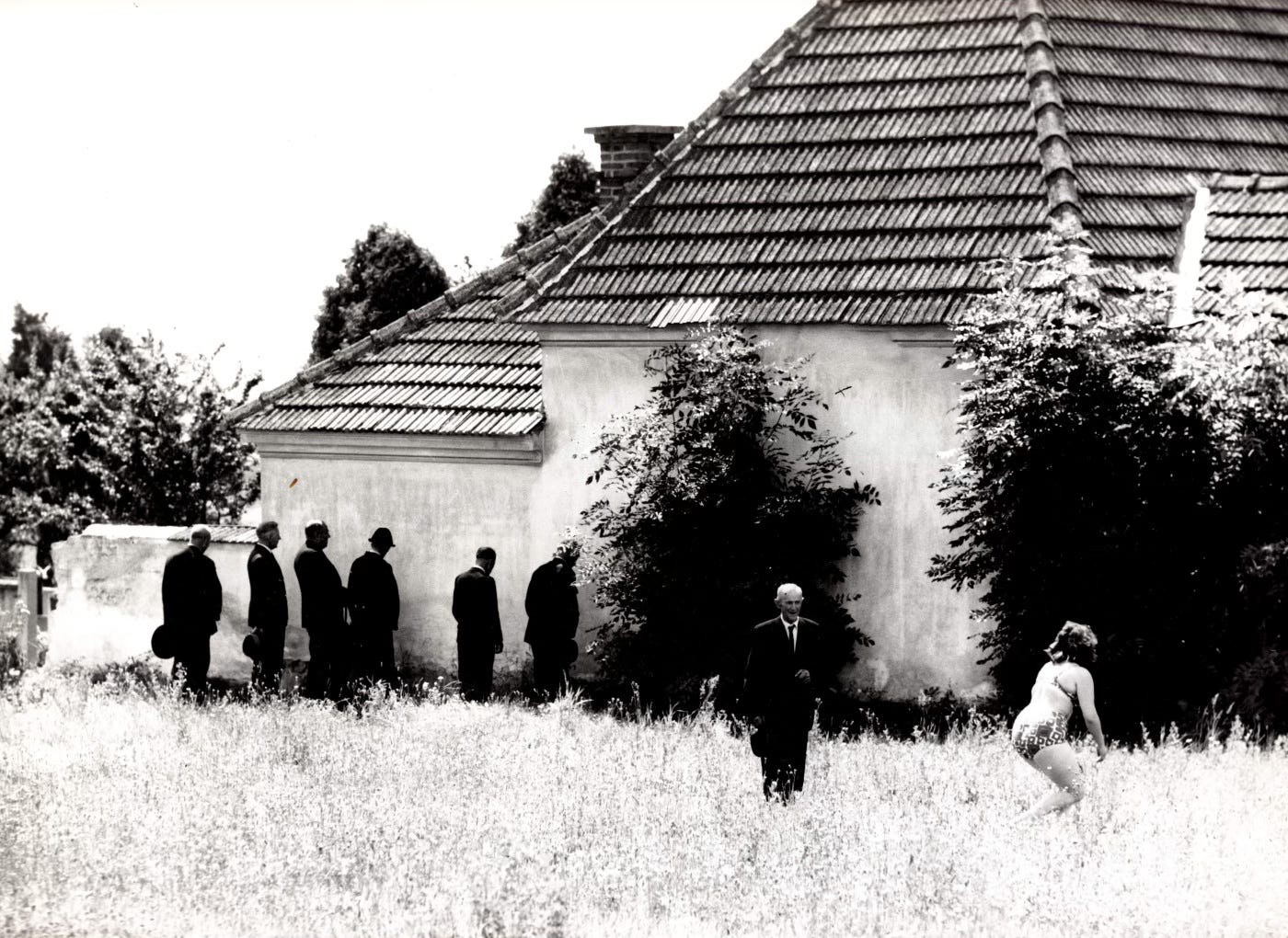
They are Petr (Zdeněk Bezušek), Bambas (Karel Blažek) and the latter’s unnamed father (Forman regular Jan Vostrčil), reuniting in their native village. Petr and his girlfriend Štěpa (Věra Křesadlová, Forman’s wife at the time) live in Prague, having moved there when Petr’s musical career took off, and Bambas (who was left behind to work as a school administrator) rarely lets us forget it, peppering his conversation with jealous, point-scoring asides that can usually be read in more than one way. For a non-professional actor, Blažek does an extraordinary job of conveying Bambas’ inner melancholy, though it turned out that part of the reason was that he was dying of leukaemia, succumbing just six weeks after shooting finished and never seeing the finished film.
Passer delicately counterpoints their low-level squabbling (which, as so often in real life, is never really resolved) with the altogether more down-to-earth attitudes of their womenfolk: in addition to Štěpa, there’s no-nonsense housewife and mother Maruš (Jaroslava Štědrá), and Bambas’ mother-in-law (Vlastimila Vlková), who turns out to have had the least predictable life of all, assuming her story of being abducted by a travelling circus is true. But much of the time is spent with Štěpa—I’m far from the only person to note her resemblance to Julie Christie, specifically Liz in Billy Liar (1963), and Štěpa has a similarly free-spirited, self-consciously Sixties attitude to life, instinctively favouring the children over the adults, and even innocently flirting with the local village idiot (according to Passer, this was the only improvised scene in an otherwise tightly-scripted production).
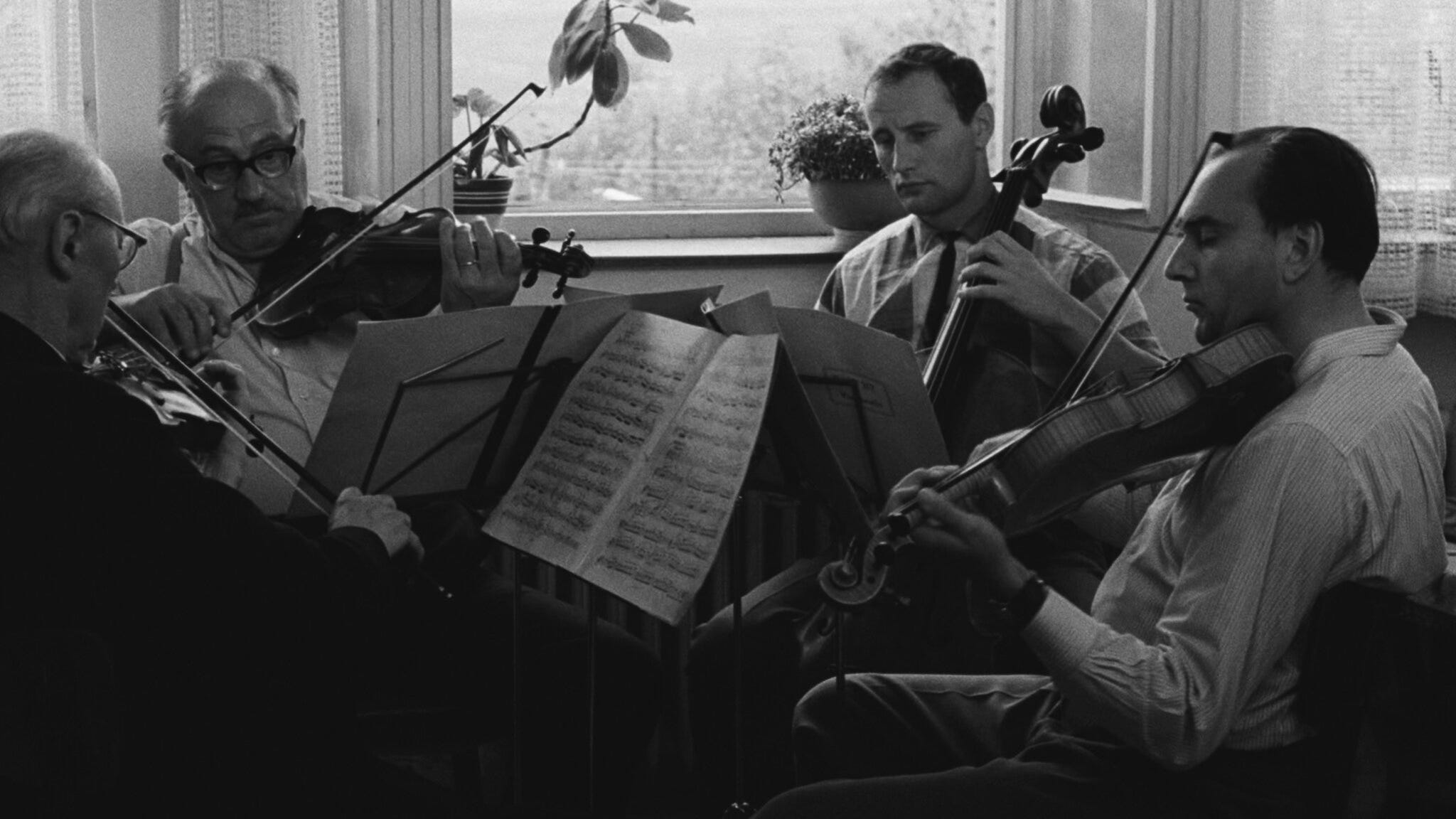
The film’s comedic high point is the scene where musicians of decidedly varying competence levels systematically shred the opening movement of Mozart’s Eine kleine Nachtmusik, a scene that wouldn’t be half so funny if the actors weren’t obviously playing their instruments for real. In fact, the mostly non-professional actors were cast as much for musicianship as acting ability, with Jan Vostrčil having originally been one of the conductors in If There Were No Music—his real-life day job—and was then somehow persuaded to play the major supporting role of the father in Forman’s Black Peter (Černý Petr, 1964) despite his total lack of acting experience and previous interest in doing any such thing. He would go on to become one of the great presences of 1960s Czech cinema, not least in this film.
The lightness of Passer’s touch recalls Jean Renoir at his peak, and comparisons with the latter’s Partie de Campagne (1936) are by no means misplaced. Forman’s regular cinematographer Miroslav Ondříček (whose work was completed by Josef Střecha after Ondříček was poached by Lindsay Anderson mid-production) manages to make the lighting look both meticulous and deceptively casual, the slightly off-centre compositions giving an off-the-cuff feel that chimes perfectly with the film as a whole. The scenes with Bambas’ children are small miracles of choreography and cutting, especially Štěpa and little Kaja’s peek-a-boo game interweaving itself into an early conversation, or the dinner-table scene in which a chicken leg changes plate three times before being accidentally drenched, or the brief looks exchanged between a city visitor and a gaggle of village women as they march past her car, rakes proudly aloft.
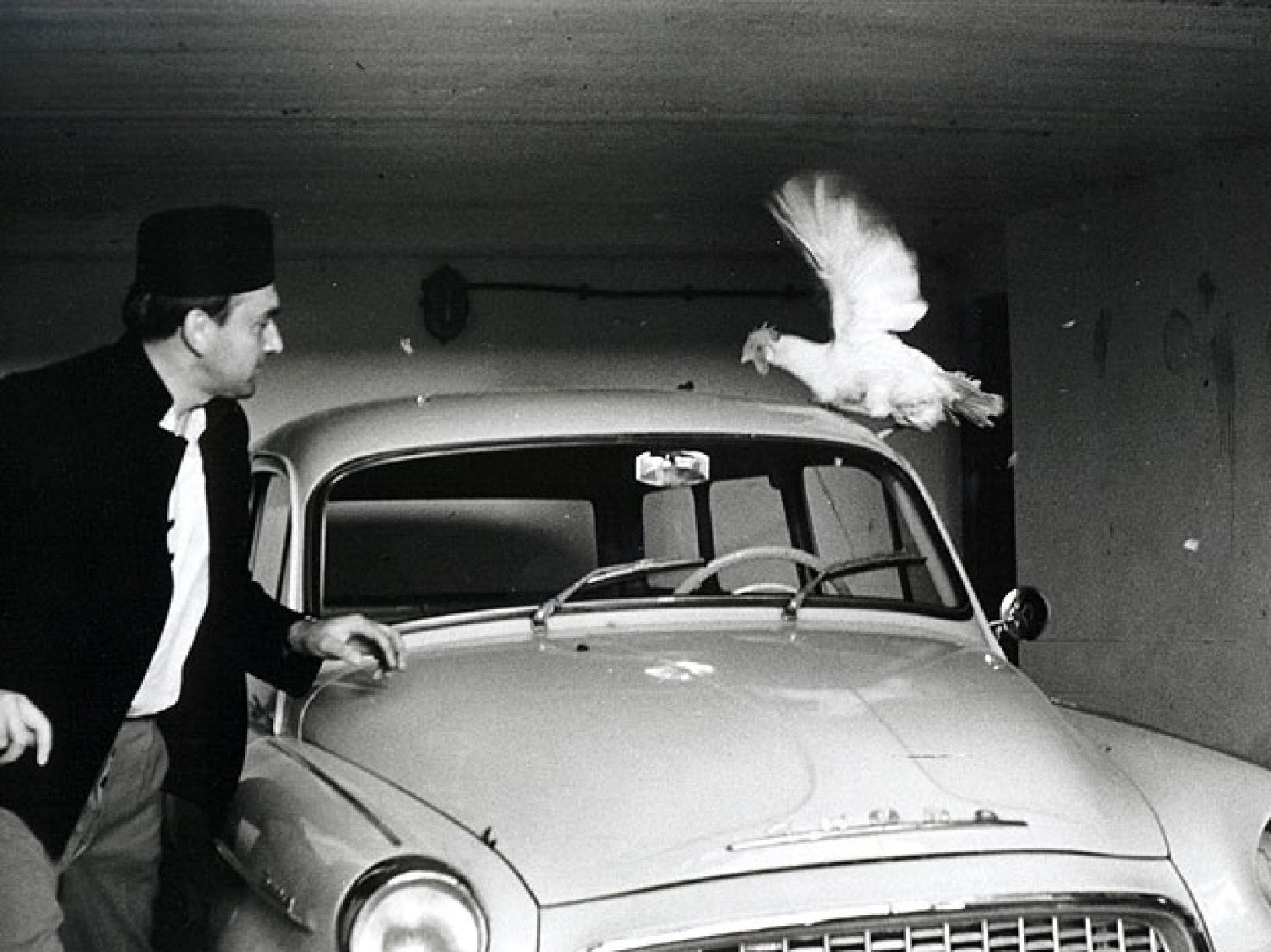
In tandem with this, Passer has a wonderful eye for absurd but strangely congruous juxtaposition, with first a white then a black kitten held up outside the open window for the string quartet’s reluctant delectation, or the incident with the chickens and the car, its bloody conclusion rendered oddly poetic by a perfectly-formed egg rolling up to the corpse. The film’s final shot is too delicious to spoil, but Pauline Kael’s description of it as “a freeze-frame closing gag that’s so funny and so completely dotty that you’re not likely to forget it” is right on the money.
Aside from A Boring Afternoon (Fádní odpoledne), a short made for but cut from the 1965 anthology of Bohumil Hrabal adaptations Pearls of the Deep (Perličky na dně), Intimate Lighting was Ivan Passer’s only Czech film. He continued to collaborate with Forman, co-writing The Fireman’s Ball (Hoří, má panenko!) in 1967, and like him left the country for good in the late 1960s, though Passer struggled to fit his out-of-kilter sensibility into the far more commercialised American film industry. Cutter’s Way (1981) showed that this wasn’t always a losing battle, but it’s appropriate that the dominant mood of Intimate Lighting is one of regret for lost opportunities – on this evidence, Passer is at least as original as (and possibly even superior to) his younger compatriot Jiří Menzel when it comes to affectionately wistful observation of human folly, and it’s a shame that external circumstances meant he was never able to develop his gifts within his native culture.