Innocent Sorcerers
Niewinni czarodzieje, Poland, 1960, 83 mins, black and white

Director: Andrzej Wajda • Head of Production: Stanisław Adler, for Zespół Filmowy Kadr • Screenplay: Jerzy Andrzejewski, Jerzy Skolimowski • Cinematography: Krzysztof Winiewicz • Editing: Wiesława Otocka • Production Designer: Leszek Wajda • Costumes: Katarzyna Chodorowicz • Music: Krzysztof Komeda • Sound: Leszek Wronko
Cast: Tadeusz Łomnicki (Bazyli), Krystyna Stypułkowska (Pelagia), Wanda Koczeska (Mirka), Kalina Jędrusik (journalist), Teresa Szmigielówna (nurse Teresa), Zbigniew Cybulski (Edmund), Roman Polański (Dudek, aka “Polo”), Andrzej Nowakowski (musician), Andrzej Gawroński (jazz club spectator), Marian Kociniak (jazz concert spectator), Krzysztof Komeda (himself), Henryk Kurek, Sława Przybylska (singer), Jerzy Skolimowski (boxer), Andrzej Trzaskowski (himself), Andrzej Wojciechowski, Jan Zylber (bearded man)
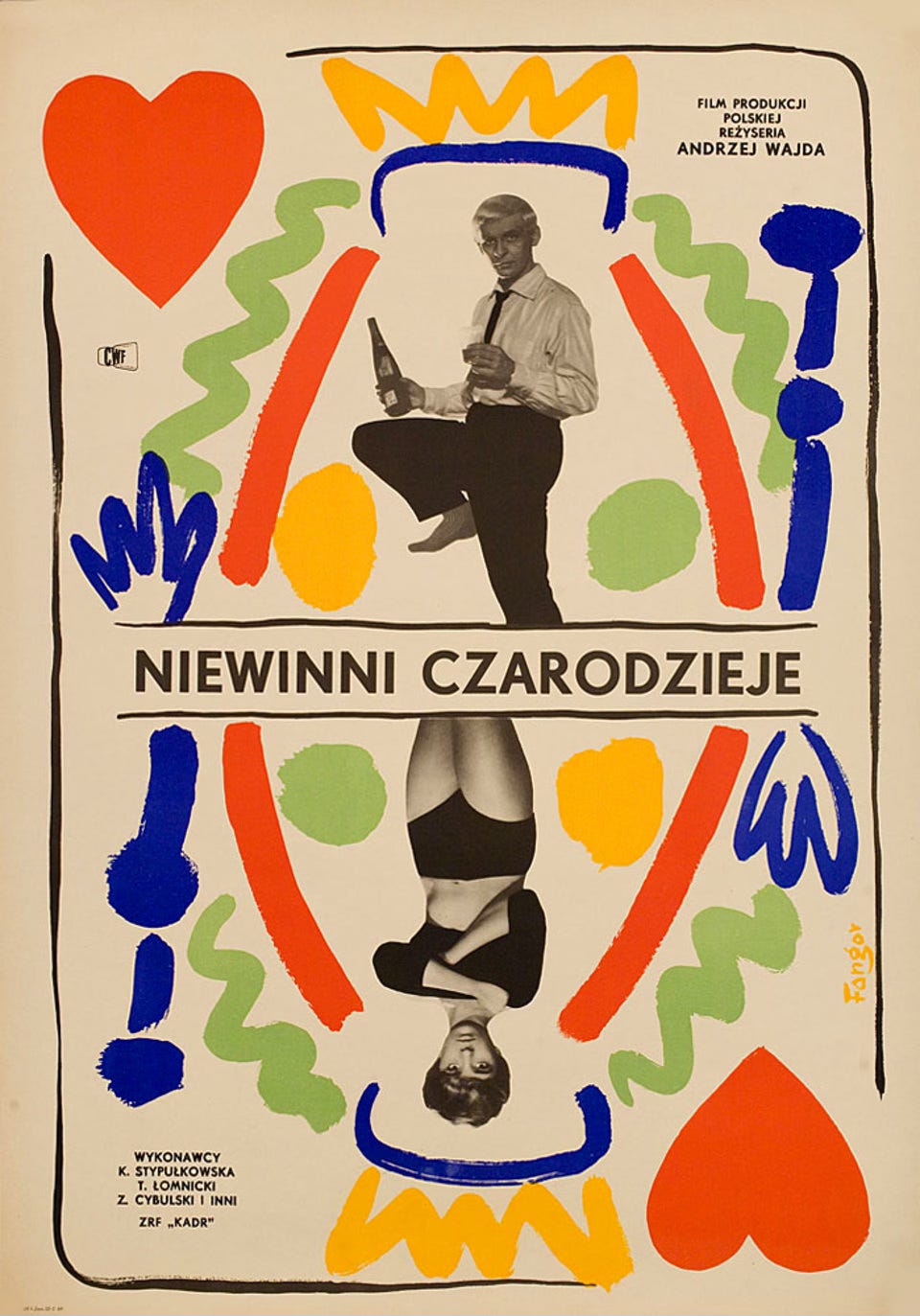
After making four WWII-set feature films in a row, and having come a serious cropper with the fourth, Lotna (1959), Andrzej Wajda recognised that the time had come for a change of direction. Which is signalled over the opening credits, accompanied as they are by a lovely, lilting piece by the great jazz composer Krzysztof Komeda, whose uncredited trumpeter seems to be consciously channelling Miles Davis, very much to the music’s advantage. (The trumpeter in question was Polish jazz legend Tomasz Stańko, then still in his late teens.) Whatever the rest of the film’s going to be like, it’s clearly going to be a radical departure from his previous work.
So too is the opening scene, in which a young man with bleached-blond hair (instantly recognisable as Tadeusz Łomnicki, star of A Generation) gets up, showers and makes coffee in pretty close to real time, a sequence that may consciously have been influenced by the scene with the maid in opening of Vittorio De Sica’s Umberto D.(1952) less than a decade earlier. It’s a small, cramped flat, whose various accoutrements suggest a student of some kind, although an unexpectedly well-heeled one, as he owns a reel-to-reel tape recorder, on which he plays back snippets of evidently home-made recordings of a woman. It’s hard to tell whether the echo of Samuel Beckett’s Krapp’s Last Tape is intentional; Łomnicki would later star in Antoni Libera’s 1985 stage production, but whether either he or Wajda knew the play back then is harder to establish; the play had had its world premiere as recently as 1958.
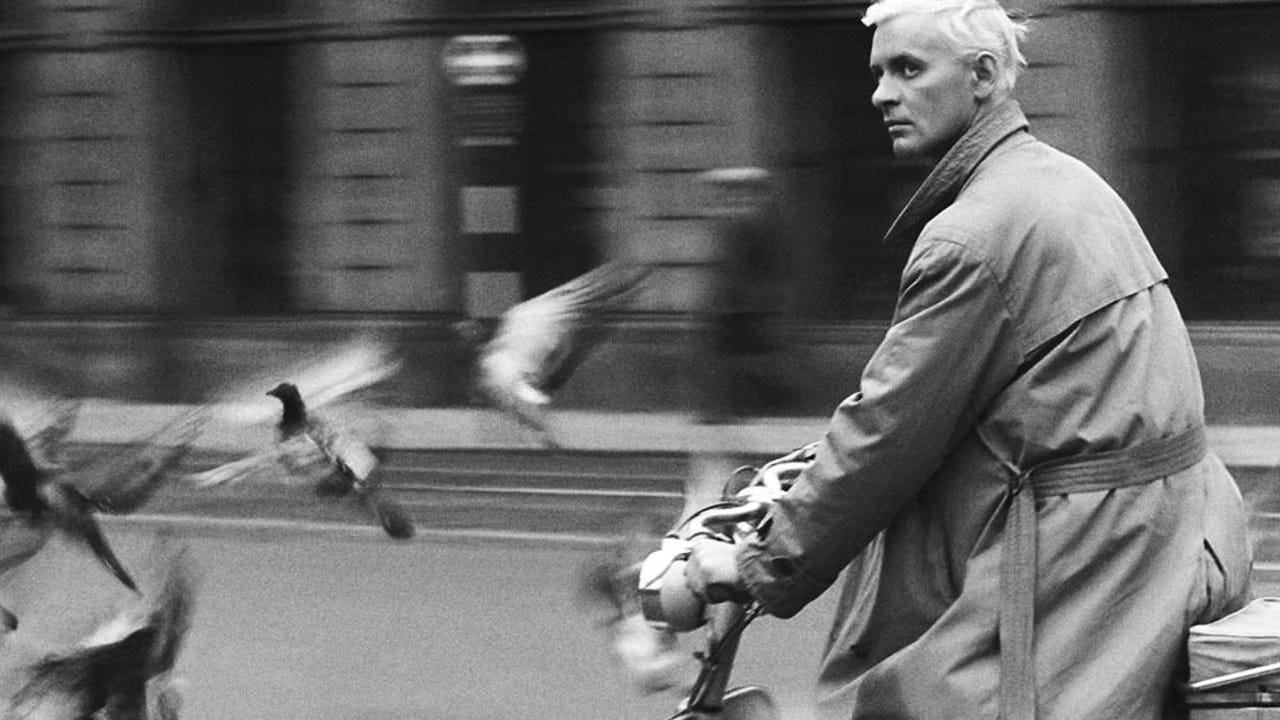
We then follow Bazyli, for such is his name, as he does his day job as a sports doctor (one of the first things he does is disqualify a very young but still instantly recognisable Jerzy Skolimowski from a boxing championship, as he’s visibly bleeding from a cut) and spends evenings playing drums in a jazz club, his bandmates including Roman Polański on the double bass. Interviewed by a journalist (future Polish sex symbol Kalina Jędrusik, who many decades later would be the subject of Katarzyna Klimkiewicz’s 2021 musical biopic Autumn Girl/Bo we mnie jest seks) after coming off stage, she asks him if he has any hobbies, and he replies “Jazz is my hobby. With a capital H.”
It’s safe to say that that line wasn’t in the initial script, written by Jerzy Andrzejewski, previously the co-screenwriter and original source novelist of Ashes and Diamonds (Popiół i diament, 1958), because there were apparently no references to jazz at all, and neither was the portrayal of young twentysomething Varsovians especially convincing. The basic problem was that for all his long-proven merits as a writer, Andrzejewski was pushing fifty, was more than doubt the age of most of his characters, and therefore essentially the Polish equivalent of that much-memed Steve Buscemi character from 30 Rock wandering round an American high school holding a skateboard, wearing a reversed baseball cap and going “How do you do, fellow kids?”
Wajda was clearly aware of this, but as he himself was fast approaching his mid-thirties he was also a decade older than his characters. But that was closer than Andrzejewski, so he booked himself into a writers’ retreat run by the Polish Writers’ Union to try to beat the script into shape. And when struggling with it, legend has it that he looked out of the window and saw a young man kicking a football around in the grounds, and said to himself “well, he’s obviously a writer, otherwise he wouldn’t be here, and he’s clearly a lot younger than I am, so maybe he’d like to read my script?”
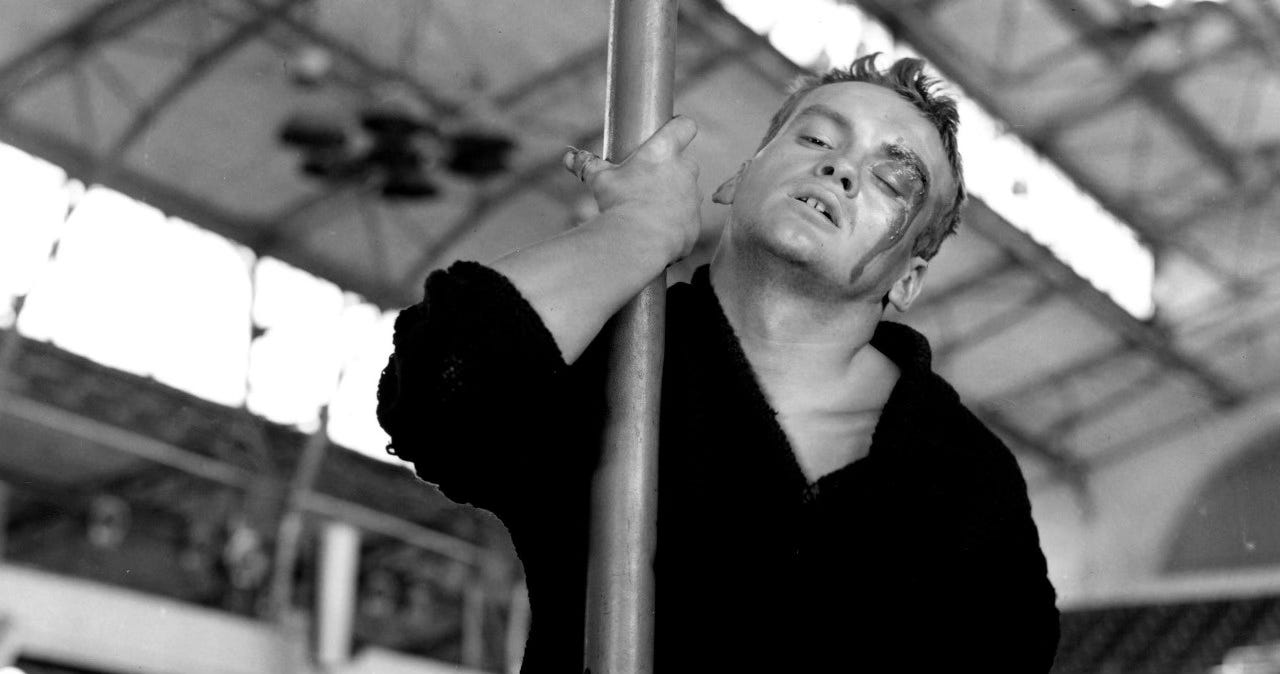
The young man was Jerzy Skolimowski, already a published poet (and therefore a legitimate member of the Writers’ Union) who was trying to write a play. This wasn’t getting anywhere, so when Wajda asked him to read his script, he thought “why not?”… and he was so unimpressed with it that—again, legend has it (and feel free to take this with a pinch of salt)—that he rewrote it from beginning to end that night without so much as a by-your-leave, in the process making the characters far more convincing as twentysomethings, giving them a love of jazz (Skolimowski’s own personal passion, but one shared by a huge proportion of his generation, so it wasn’t in any way gratuitous), and generally knocking decades off the overall tone.
Far from being outraged by Skolimowski’s presumption, Wajda was delighted, not only giving him a shared screenwriting credit (Wajda opted not to take one) but also inviting him to hang around the set as an unofficial consultant. And he even, as we’ve already seen, played a very small cameo, despite never having acted before. (Although he had boxed as a teenager, so was at least within his comfort zone there.) As he’d done with Roman Polański on A Generation, Wajda sensed a nascent film talent of which Skolimowski himself was then barely aware, and recommended that he sit the Łódź Film School entrance exams. To his surprise, he passed… and the rest is history; by the middle of the decade he was turning out some of the wittiest, most formally dazzling films that Polish cinema had ever seen.
Indeed, Wajda later said that he wished Skolimowski had played Bazyli instead of Łomnicki (possibly opposite his then girlfriend Elżbieta Czyżewska, with whom he would later star in his first two features, Identification Marks None/Rysopis, 1964, and Walkover/Walkower, 1965), but that was never a realistic option; Skolimowski was a total unknown with no track record as an actor and there was no chance of him being greenlit as a leading man at that stage in his career. And, similarly, although Wajda also said that the film should probably have been directed by a younger man like Roman Polański, Polański was still a film student at the time, so it was an equally unrealistic prospect. Even as a Wajda project, Innocent Sorcerers needed a fair bit of lobbying to get it approved by the Ministry of Culture, whose censors subsequently changed the ending, which they found unacceptably bleak. (In the final film, it’s ambiguous, metaphorically leaving a door slightly ajar rather than abruptly shutting it.) More pettily, they also deleted a shot in which Łomnicki turns on a tape recorder with his bare toe.
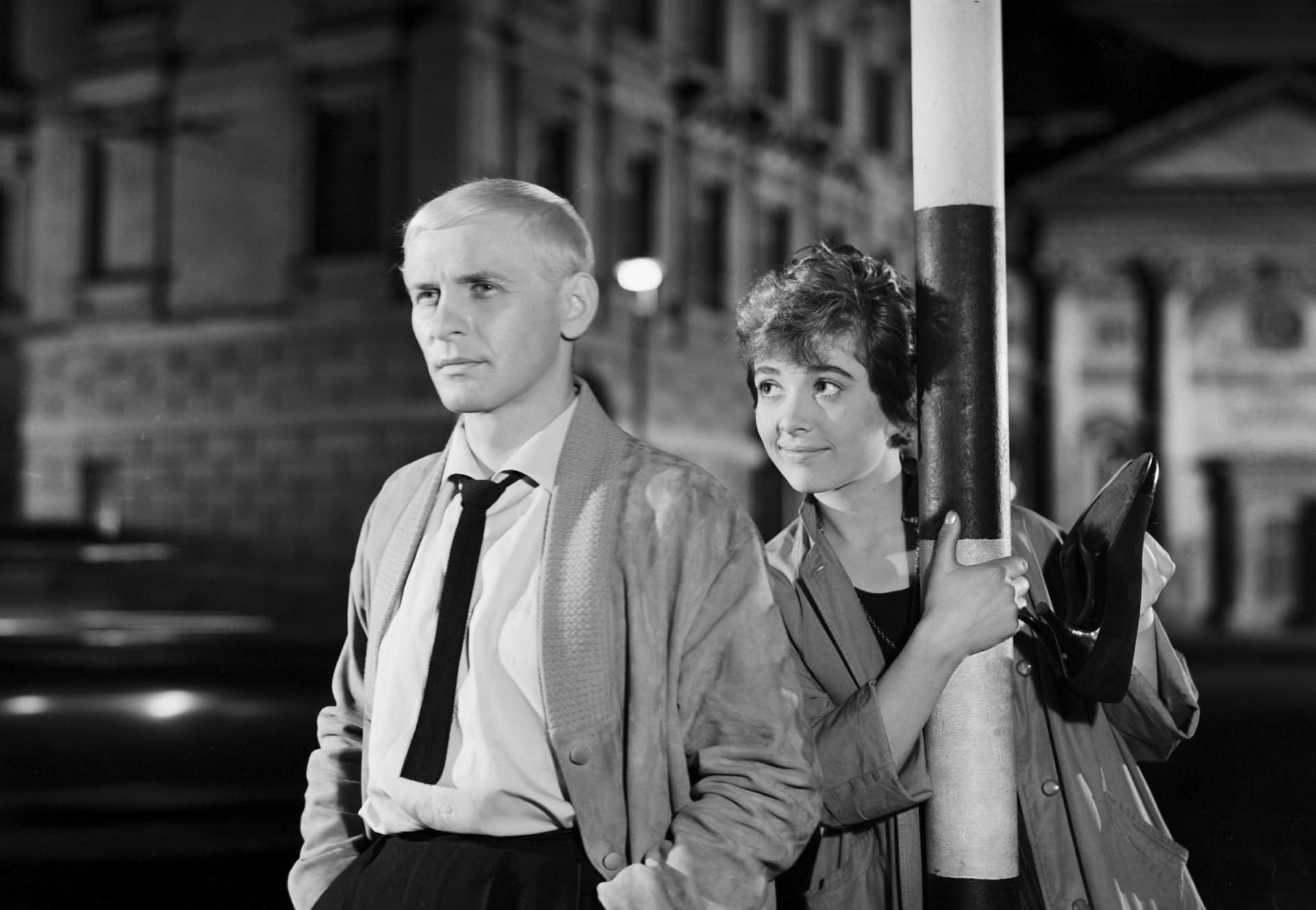
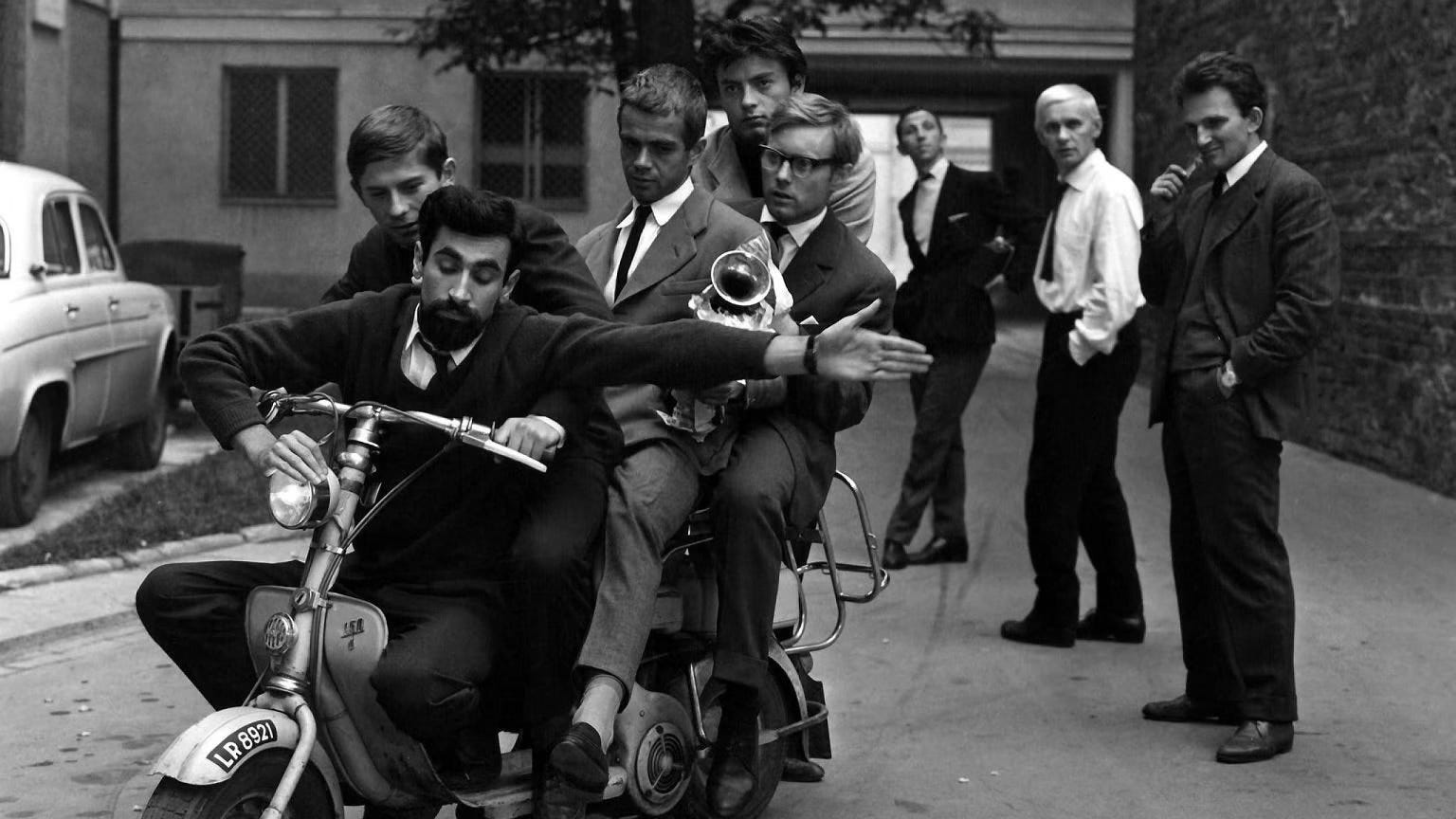
Wajda’s problem with Łomnicki was that he later felt that he was too obviously playing a scripted character rather than convincingly inhabiting Bazyli—and despite the blond makeover, he was visibly too old; both he and Zbigniew Cybulski (who plays the comparatively small role of his friend Edmund) were already in their early thirties. But the film’s central relationship, between Bazyli and the student Pelagia (real-life student Krystyna Stypułkowska, making her acting debut) has genuine chemistry—the vastly more experienced Łomnicki apparently directed much of her performance, which no doubt helped—and their nocturnal stroll around Warsaw and the subsequent scene in his flat where they intersperse chatting about love, morality and philosophy with a tantalisingly erotic game is the emotional high point, whereas the action high point is the scooter ride through Warsaw. Both scenes suggest that Wajda’s film would play very well with quite a few British and French Wave titles, and it anticipates Richard Linklater’s Before Sunrise by several decades.
Although its reception was warmer than that meted out to Lotna, Innocent Sorcerers was still heavily criticised in some quarters, managing the double feat of annoying both the Communist Party and the Catholic Church. The Communists bemoaned the characters’ lack of any clear ambitions or goals, while the Church felt that while the film went some way towards identifying the social problems posed by a generation of rootless young people, it offered no practical solutions. But it was much better received abroad (it even won a prize in Edinburgh in 1961), where films about the lives of young people from any country behind the Iron Curtain had hitherto been almost invisible, and so international critics appraised it for its considerable sociological curiosity on top of its evident cinematic merits.
The title, incidentally, comes from a phrase from the great nineteenth-century Polish Romantic poet Adam Mickiewicz’s poetic drama Forefathers’ Eve (Dziady). In 1999, nearly four decades later, Wajda would turn Mickiewicz’s epic poem Pan Tadeusz into a feature film.