A Generation
Pokolenie, Poland, 1955, 83 mins, black and white
Director: Andrzej Wajda • Head of Production: Ignacy Taub, for Wytwórnia Filmów Fabularnych (Wrocław) • Screenplay: Bohdan Czeszko, based on his novel • Cinematography: Jerzy Lipman • Editing: Czesław Raniszewski • Production Designer: Roman Mann • Costumes: Jerzy Szeski • Music: Andrzej Markowski • Sound: Józef Koprowicz
Cast: Tadeusz Łomnicki (Stanisław “Stach” Mazur, codename Bartek), Urszula Modrzyńska (Ewa, codename Dorota), Tadeusz Janczar (Jasio Krone), Janusz Paluszkiewicz (Sekuła), Ryszard Kotys (Jacek), Roman Polański (Mundek), Ludwik Benoit (Grzesio), Zofie Czerwińska (Lola), Zbigniew Cybulski (Kostek), Tadeusz Fijewski (German guard at the sawmill), Zygmunt Hobot (Abram), Cezary Julski (coachman), Bronisław Kassowski (Waldemar Berg), August Kowalczyk (priest), Jerzy Krasowski (Home Army Major), Zenon Laurentowski (carpentry shop worker), Stanisław Milski (Jasio’s father), Juliusz Roland (“Kaczor”), Hanna Skarżanka (Antoniowa, Stach’s mother), Janusz Ściwiarski (Ryszard Berg), Kazimierz Wichniarz (Werkschutz), Zygmunt Zintel (Ziarno), Ryszard Ber (Zyzio Kościelniak)
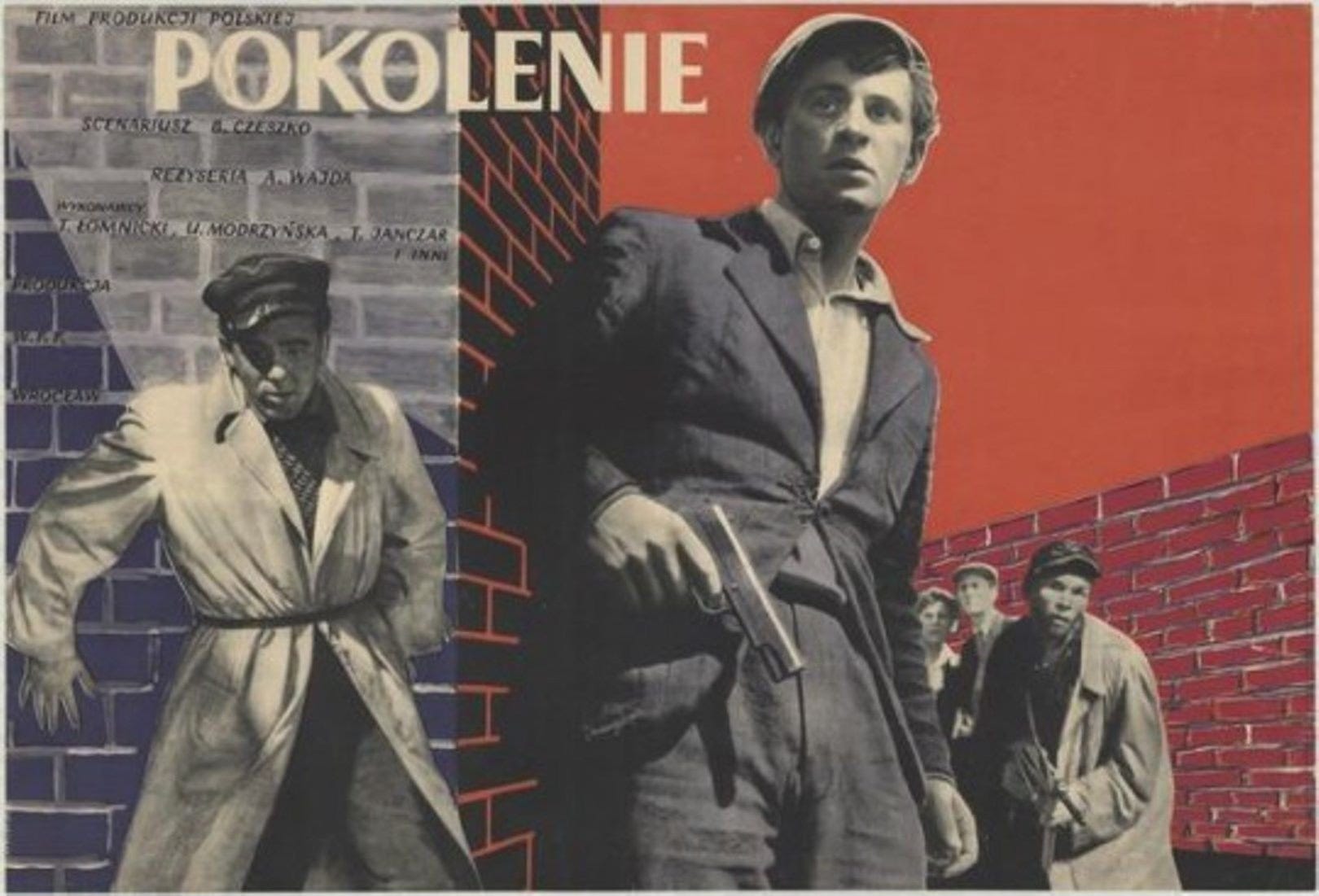
Filmed in 1954, premiered on 26 January 1955, Andrzej Wajda’s feature debut was made when all Polish film productions (and cultural projects across the board) were required to abide by the principles of Socialist Realism. However, it gets around these with considerably more élan than most, as an unsigned article in The Guardian noted as early as 12thFebruary 1958, when the film was belatedly given its first British commercial release: “Yet, although the film is burdened with a Communist message, what is interesting is the extent to which, even in 1954, a Polish filmmaker could not and would not rest quietly within the limits of the Soviet prescription. Something of the basic tragedy of Poland comes through, in spite of the conventional coat of Communist paint and, wittingly or not, the point that Wajda finally makes is that these young Poles were not so much Marxists as simply young people trying to find life and honour and love in frightful circumstances. He gives them a reality, an essentially Polish reality, which has nothing to do with Communist Man.”
I’m pretty sure that Wajda knew perfectly well what he was doing, but he was equally aware of how privileged he was to get a feature-film directing gig so early in his career—he turned 28 during production, which was seriously precocious for a Polish feature debutant back then. After leaving the Łódź Film School the previous year, he was taken on as an assistant (one of three) to Aleksander Ford (1908-1980), a pre-war Polish cinema veteran, in which capacity Wajda worked on Five Boys from Barska Street (Piątka z ulicy Barskiej, 1953). This was one of the more successful pure examples of Socialist Realism in that, while it didn’t rock any boats, it nonetheless successfully managed to incorporate the prevailing ideological strictures into a familiar genre piece about young criminals. It didn’t just provide Wajda with essential on-set experience (the film was also Poland’s second colour feature) but also useful contacts—two of the Barska Street boys, Tadeusz Janczar and Tadeusz Łomnicki, would play the male leads in A Generation. And Ford himself was an even better contact, since by that stage in his career he knew pretty much everyone in the Polish film industry and so was able to pull strings that others couldn’t.
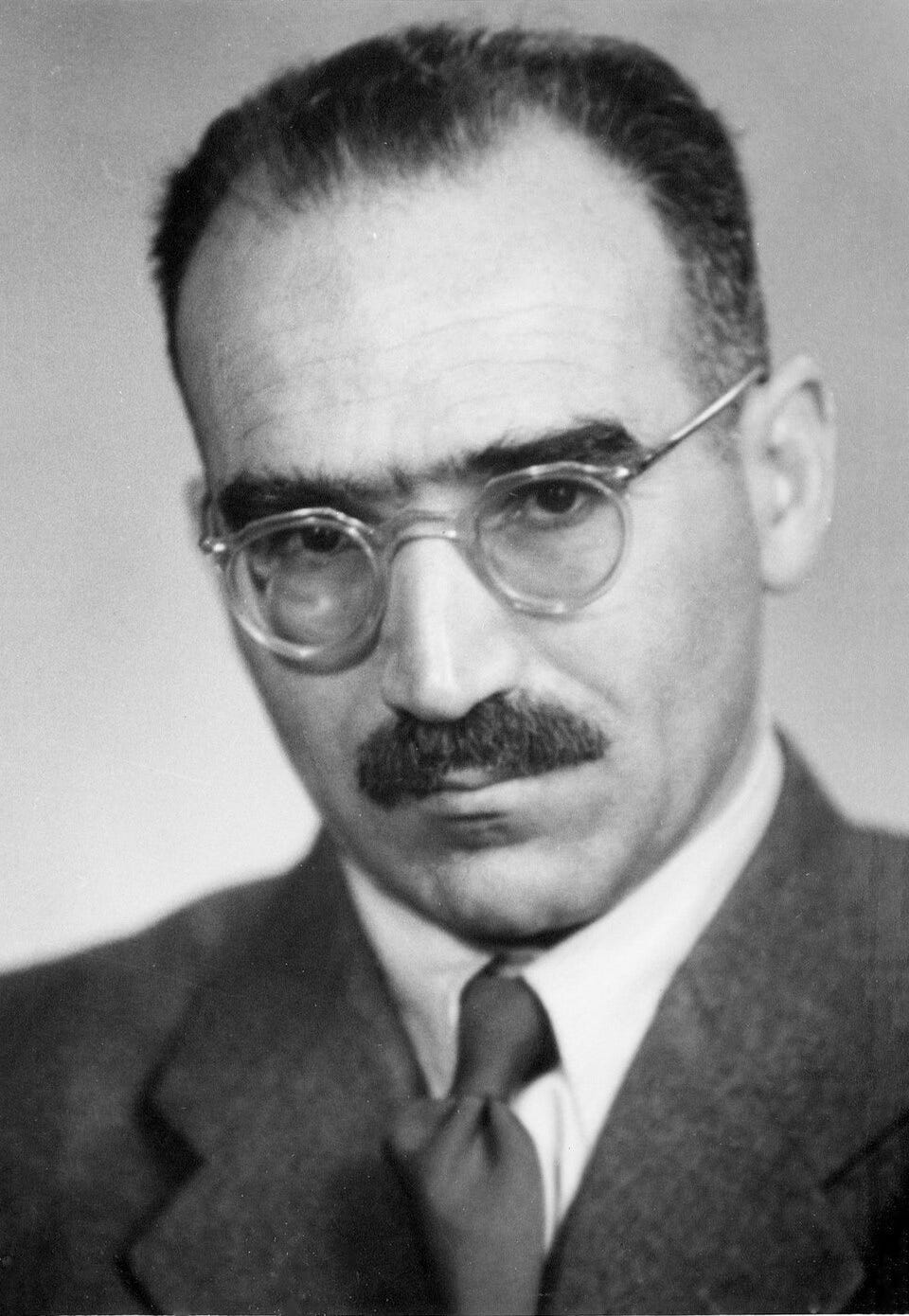
Which is how Wajda moved so quickly from assistant to feature director. Five Boys from Barska Street was one of the more successful Polish films of its era, and it also attracted a modicum of international attention, winning a minor Cannes Film Festival prize. Unsurprisingly, the Polish film authorities wanted more of the same, and Bohdan Czeszko’s 1952 novel A Generation seemed ideal material, since it was also about a group of initially naïve youngsters, only with a wartime instead of an immediately postwar backdrop. Czeszko himself was duly commissioned write a a screenplay, and Ford was the obvious choice to direct—but he turned the project down, as he wasn’t keen on repeating himself. However, he’d been very impressed by his 27-year-old protégé, and said that if Wajda directed the film, Ford would personally guarantee the film’s quality as overall artistic supervisor. And that was Wajda’s first big career break.
This being 1954, Wajda was as required to abide by the tenets of Socialist Realism as Ford had been, and the film duly features a male and female lead who are pretty much archetypal examples of the notional ideal: Tadeusz Łomnicki’s protagonist Stach even gets a mid-point lecture about Marxism courtesy of his carpentry-shop supervisor. However, Tadeusz Janczar was cast as the considerably more intriguing Jasio Krone, who’s clearly meant to set a bad example for straying from the path of ideological righteousness, for which he is duly punished—but Janczar gives such a charismatic performance that it’s hard to take your eyes off him.
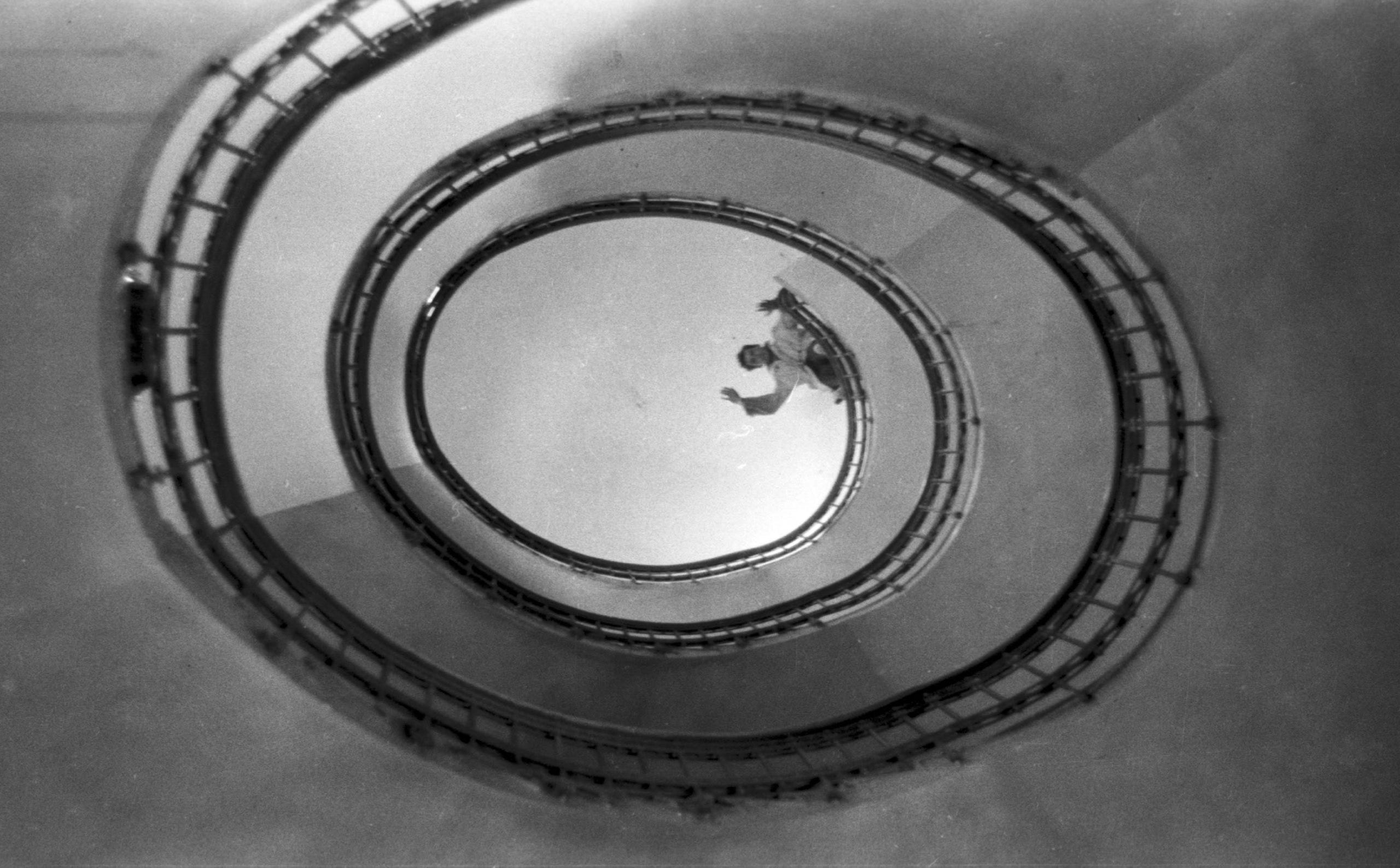
It’s also hard not to strongly empathise with Jasio, given that he exhibits far more recognisably human frailties than his comrades-in-arms. In fact, so much does Janczar dominate the film that I’m always surprised on repeat viewings to recall that it still has fifteen minutes to run after his spectacular death scene in a stairwell. This is a strong candidate for the most impressively staged action scene in any postwar Polish film up to then, and it also seems to have been unexpectedly pioneering—as someone who’d personally lived through WWII only a decade earlier, Wajda wasn’t inclined to treat the topic of its associated violence lightly (this would be even more true of his next two films), and accordingly seems to have been the first filmmaker anywhere in the world to rig up an explosive squib to simulate a bullet hitting a body and blood spurting out.
Wajda also very much saw A Generation as a young person’s film, not just in terms of the age of the characters but also his colleagues behind the camera. Some were veterans, like editor Czesław Raniewski, designer Roman Mann and sound recordist Józef Koprowicz, but quite a bit of the time Wajda was able to hire people closer to his own age. Cinematographer Jerzy Lipman, who’d already shot two of Wajda’s film-school shorts and was the camera operator on Five Boys from Barska Street, was still in his early thirties, composer Andrzej Markowski was on the cusp of thirty, and assistant director Kazimierz Kutz, later a major director in his own right, was only twenty-five. The title of the novel A Generation originally referred to Bohdan Czeszko’s own generation, born in the early 1920s and coming of age under Nazi occupation, but it applies just as much to the slightly younger generation represented by Wajda and his colleagues—one of whom was an actor by the name of Roman Polański, twenty at the time but looking a fair bit younger.
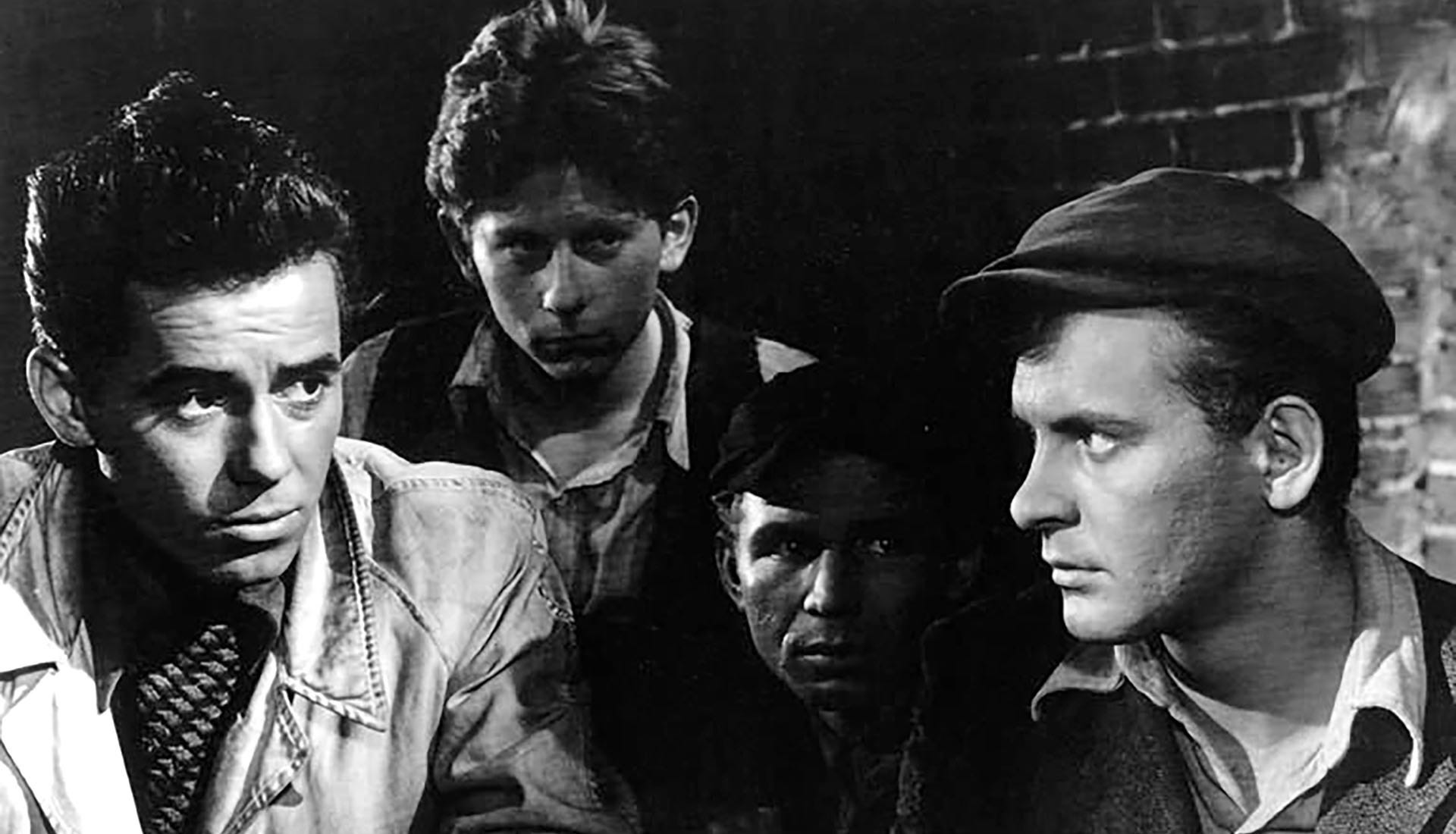
(Wajda had first met Polański, some seven years his junior, on the set of the Three Stories project in 1953, and they had plenty of time to chat since Polański was kicking his heels between takes as an actor while Wajda’s contribution to the project had been unceremoniously scrapped. And it rapidly became clear to Wajda that Polański had an unusually strong film sense despite his lack of formal training, and recommended that he enrol at the Łódź Film School. Which Polański duly did, and the rest is history.)
While Wajda was able to subvert the strictures of Socialist Realism to a certain extent via the character of Jasio, in other respects his hands were tied. As a volunteer in Poland’s Home Army himself, it must have stuck in his craw to present one of the film’s villains, Ziarno (Zygmunt Zintel) as, effectively, one of Wajda’s own comrades-in-arms. But the Home Army had fallen into official disfavour under the postwar regime because it hadn’t merely been an anti-Nazi organisation but also an anti-Soviet one, formed in response to the September 1939 invasion of Poland on two fronts. Indeed, merely mentioning the Home Army’s name was taboo at the time, although it’s clearly what Ziarno represents, as there were only two significant WWII-era anti-Nazi resistance organisations, the Soviet-aligned People’s Guard (which is named) being the other one. There’s also a particularly unpleasant touch when Ziarno is revealed to be a rabid anti-Semite, thus further smearing the Home Army’s reputation by association. Wajda did at least (and was unsurprisingly very keen to) make amends with his very next film, Kanal, a much more positive take on the Home Army’s exploits.
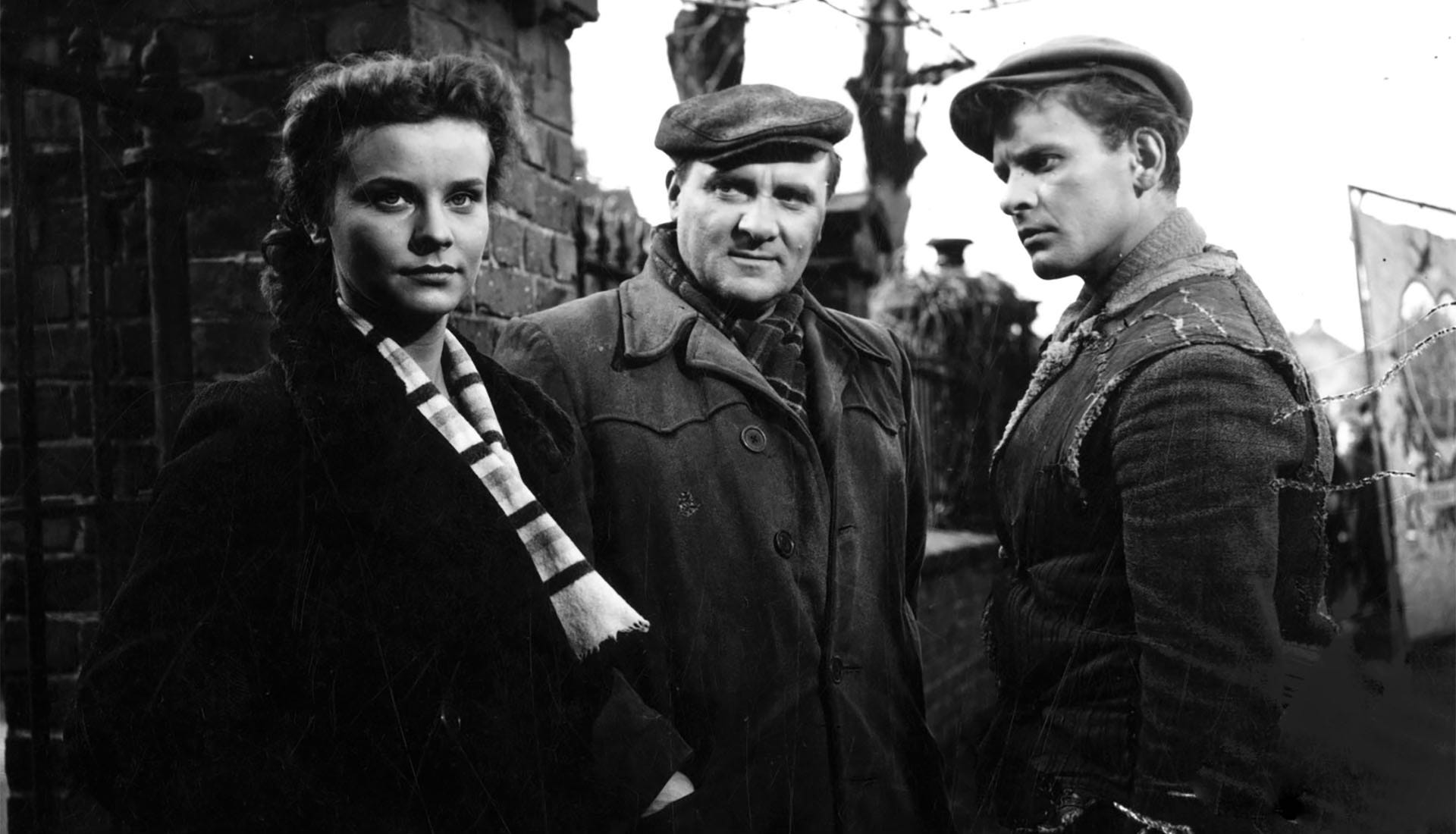
But it’s easy enough to tune out ideological compromises when the film is this gripping pretty much from beginning to end. It opens with a daring attempted robbery on a moving train (with Zbigniew Cybulski making his first screen appearance, although his character doesn’t last long), and there’s plenty more action and suspense, with characters constantly sizing each other up to try to gauge whether they’re on the same side. There’s also romance, with Tadeusz Łomnicki and Urszula Modrzyńska both being good enough actors (indeed, Łomnicki was already on the way to becoming a bona fide Great Actor who would later have more than one theatre named after him) to elevate their characters above crude Socialist Realist archetypes. As a more experienced anti-Nazi activist, Modrzyńska’s character Dorota becomes another of Stach’s tutors in the ways of ideological righteousness, although he’s clearly more interested in her more physical attributes, another touch that elevates the film from being a mere political tract.
So, allowances have to be made—but, under the circumstances, surprisingly few, and Wajda’s talent is now unmistakable, in a way that really wasn’t the case with his film-school shorts. From its opening four-minute scene-setting take, A Generation is an exceptionally confident piece of work for a debutant, with the images occasionally nudging full-blown Expressionism, something else that wasn’t often encountered in Poland’s Socialist Realist era. Indeed, one of the reasons why the film received somewhat lukewarm reviews in some quarters is thought to be because it looked so startlingly different from the era’s other Polish films: were they even allowed to look like this?